Modern Python Weekly #4
GPT-5.6, NumPy 2.5.1, fresh agent tooling, and a sharper debate about how humans review AI-written code.
Week covered: July 4-10, 2026.
Python News
- NumPy 2.5.1 - Released on July 4, 2026 as a quick follow-up to NumPy 2.5.0, keeping the scientific Python stack moving early in the week.
💡 Modern Python's Take: Small NumPy point releases often matter more than splashier launches because they remove friction across dozens of downstream packages at once. - pandas 3.0.4 - The June 28, 2026 maintenance release is still the relevant pandas upgrade wave this week, focused on regressions and bug fixes rather than new APIs.
💡 Modern Python's Take: This is the kind of release that says “upgrade for stability, not novelty,” and that is exactly what many production data teams want from pandas right now. - Python Polars 1.42.1 - The June 30, 2026 Python release added more parquet metadata efficiency and explicitly skipped pandas 3.0.4 in one path because of a
pd.TimeDeltasegfault.
💡 Modern Python's Take: Polars continues to ship like an engine team, and the explicit note about pandas interop edge cases shows how seriously it treats real mixed-stack usage.
AI news
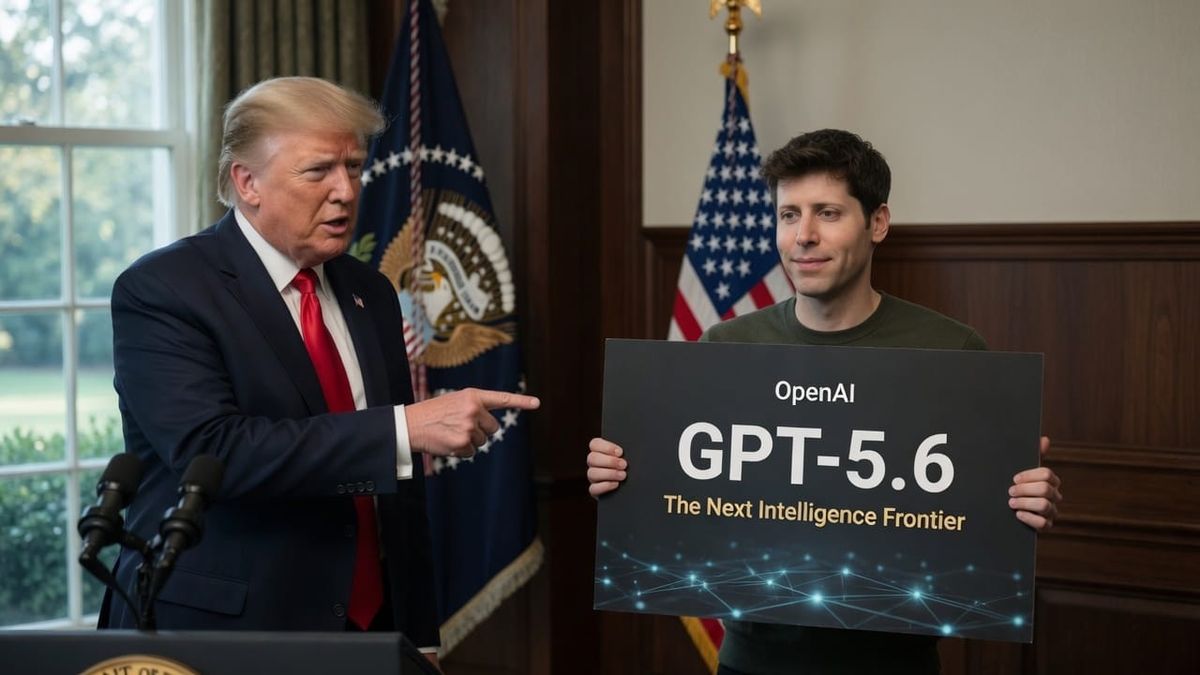
- GPT-5.6: Frontier intelligence that scales with your ambition - OpenAI launched GPT-5.6 on July 9, 2026, with Sol, Terra, and Luna, pushing hard on coding, knowledge work, and multi-agent
ultraworkflows.
💡 Modern Python's Take: The headline is not just “smarter model”; it is the explicit packaging of parallel-agent execution as a default product idea, which should influence how Python teams design tool orchestration layers. - Introducing GPT-Live - Announced on July 8, 2026, GPT-Live turns voice into a lower-latency, more natural interaction mode instead of a thin speech wrapper over text chat.
💡 Modern Python's Take: Voice-first workflows are becoming engineering-relevant because they pressure agent platforms to manage interruption, turn-taking, and context continuity as first-class systems concerns. - Inviting hard questions - Anthropic used its July 9, 2026 newsroom post to ask the public for harder AI questions and to commit to showing more of its reasoning process in public-facing answers.
💡 Modern Python's Take: Labs are increasingly competing on trust posture as much as benchmark wins, and that matters for Python builders choosing which model vendors can sit inside regulated workflows. - Introducing Muse Image and Muse Video - Meta announced new generation models on July 7, 2026, expanding its push into multimodal creation with image editing, video generation, and native audio support.
💡 Modern Python's Take: The practical consequence for developers is more pressure to build pipelines that treat text, image, audio, and video assets as one continuous product surface instead of separate tooling silos.
(1) Today we're releasing Muse Spark 1.1 -- a strong agentic and coding model at a very low price. It's available through our new Meta Model API and in Meta AI.
— Mark Zuckerberg (@finkd) July 9, 2026
Mark Zuckerberg posted on X for promoting Muse Spark 1.1
Tools and Projects
- uv 0.11.28 - Released on July 7, 2026 with CPython 3.15.0 beta 3 support plus preview work on relocatable project environments.
💡 Modern Python's Take: Relocatable environments are the kind of packaging detail that can materially simplify CI, remote dev, and agent-managed workspaces if Astral keeps pushing it through to stability. - Ruff 0.15.21 - Shipped on July 9, 2026 with more human-readable rule handling, stronger suppression behavior, and new lint coverage around pytest and
pyupgrade.
💡 Modern Python's Take: Ruff keeps tightening the loop between rule design and developer comprehension, which is exactly what AI-assisted code review needs from a linter in 2026. - LeRobot v0.6.0: Imagine, Evaluate, Improve - Hugging Face published a July 7, 2026 update for its robotics stack, continuing to connect models, datasets, and evaluation into one workflow.
💡 Modern Python's Take: Robotics is becoming another proving ground for the Python AI toolkit story, where data, benchmarks, and inference infrastructure have to ship together or the stack falls apart. - Native-speed vLLM transformers modeling backend - Hugging Face's July 8, 2026 post focused on making
transformersand vLLM work together with less performance compromise.
💡 Modern Python's Take: Python inference stacks are maturing around interoperability instead of framework lock-in, which is healthier for production teams than yet another isolated serving runtime.
Articles
- Separating signal from noise in coding evaluations - OpenAI's July 8, 2026 research post argues that coding benchmarks need sharper methodology if they want to say anything useful about real agent performance.
💡 Modern Python's Take: Python teams should read this as permission to distrust single-number benchmark marketing and to invest more in task-specific evals that actually resemble their repos. - Can Large Language Models Generate Observability-Aware Code? - This July 7, 2026 paper studies whether coding agents preserve diagnostic semantics and runtime fault signals in generated systems, and the answer is mostly not yet.
💡 Modern Python's Take: Functional correctness is still a dangerously incomplete definition of “good generated code,” especially for Python services that live or die by logging, tracing, and debuggability. - 3100 Opinions on Code Review in an AI World: Building Causal Theory from Practitioner Discourse - Posted on July 8, 2026, this work frames code review as the main control point for whether coding agents help or harm software quality.
💡 Modern Python's Take: If your team is adopting agents, review design is now an architecture decision, not just a process preference. - Scientific Code Search at Scale: A Multi-Domain Dataset and Benchmark - Released on July 3, 2026 and still circulating this week, the paper introduces a benchmark for finding domain-specific scientific repositories and snippets.
💡 Modern Python's Take: Better scientific code retrieval matters because Python's research ecosystem is huge, messy, and increasingly too large for humans or agents to navigate by intuition alone.